Copies Sold, People Playing, Playing Right Now: The Three Game Numbers Everybody Mixes Up
One game this fall "sold 230,000 copies" and also had "1.7 million players" — and both numbers came from the same report. They're not arguing. They're counting different things. Here's the co-op guide to telling them apart before launch week buries you in all three.
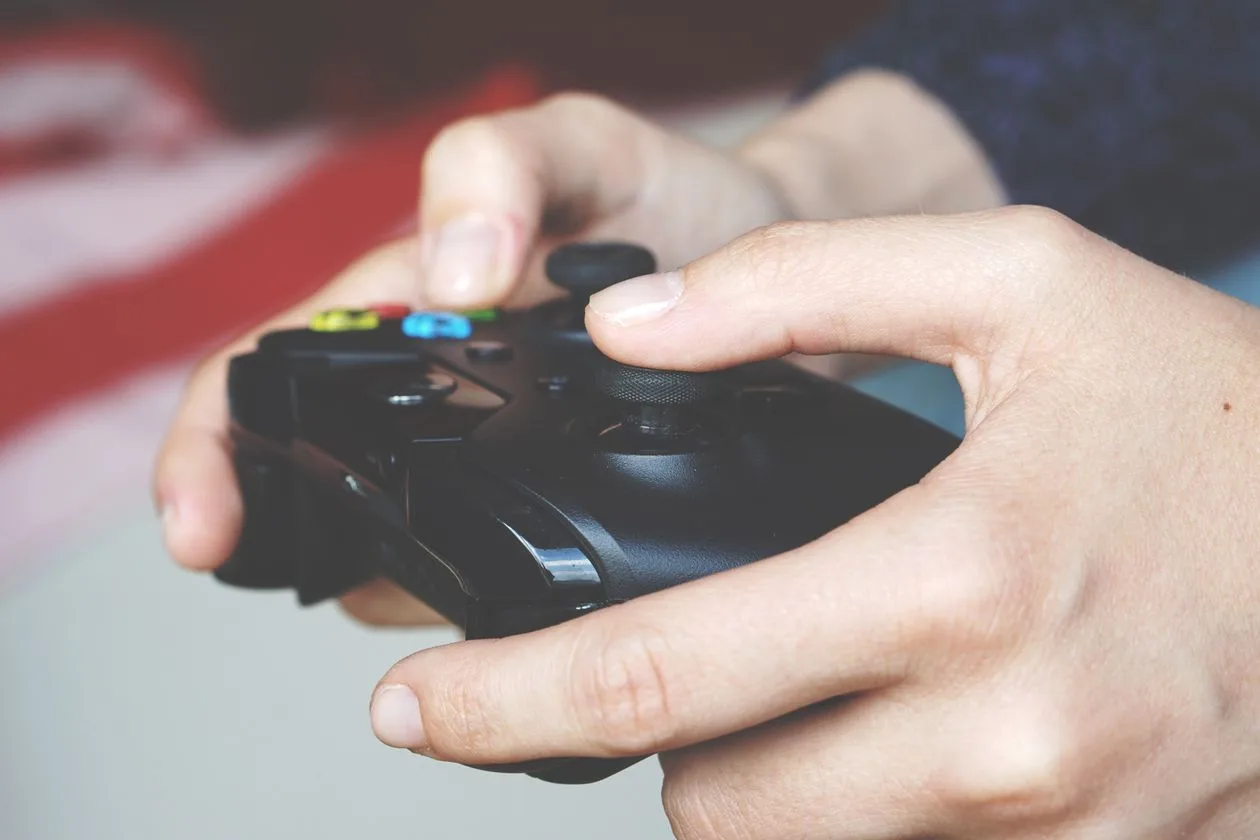
Launch week is coming, and with it the number soup. A headline will say a game "hit a million players." Another will say it "only sold 200,000 copies." A chart will show a player count with six zeroes and someone in the comments will call it the sales figure.
All three numbers can be true at once. They're just counting different things — like the difference between how many people bought a ticket, how many people are in the cinema across the whole day, and how many are in their seats at this exact second. Here's each one, in plain terms.
Number one: copies sold — and the chart that doesn't count them
The monthly U.S. chart from Circana — the big ranking everyone quotes — doesn't count copies. It ranks games by dollars spent. An $80 game that sells fewer copies can outrank a $40 game that sells more, because the chart is following the money. It's also U.S. only, and its "month" isn't the calendar month: the most recent one, called "September," actually ran from August 30 to October 3.
Inside that chart there are two kinds of numbers, and Circana marks which is which:
- Real receipts. Some publishers hand over their actual download sales. Those games get counted exactly.
- Very good guesses. Some publishers don't share — Nintendo is the famous one; it reports the copies it ships to shops but not its download sales. For those games, Circana estimates the download side from everything else it can see. The guess is labelled as a guess, right on the chart.
September's chart shows both flavours side by side: total U.S. spending of $4.8 billion (down 1% on last year), Marvel's Wolverine at No. 1 — counted from real receipts — and games like EA Sports FC 27 ranked partly on the educated-guess side. Neither kind is fake. One is a till receipt and one is a well-informed estimate, and the chart tells you which you're looking at. Phone games, by the way, aren't in this chart at all — their numbers come from a different firm and get reported separately.
Number two: playing right now — the Steam count
Steam shows a live number for every game: how many people are in that game at this moment, on Steam. Think of it as counting heads in the cinema right now, not tickets sold today.
That number is exact — it comes straight from Valve's own systems, and the public trackers that graph it (SteamDB is the one everyone uses) refresh it every five minutes for the biggest games and every ten minutes for the rest. Exact, but narrow. It only sees Steam: not PlayStation, not Xbox, not other PC shops, and not the much larger crowd who played this morning and logged off. A game's biggest "playing right now" moment — its peak — is a real achievement and a great headline. It isn't the number of people who own the game, and it definitely isn't copies sold.
Two traps live right next to it. The "owners" ranges shown on tracker pages — "somewhere between 500,000 and a million owners" — aren't Valve's numbers and not the tracker's own: they're other companies' estimates, and they include free copies, bundle copies and giveaway keys, so they're a ceiling, not a sale count. And the true Steam sales figure for a game exists in exactly one place: the developer's own private reports, which Valve describes as a near-live view of that game's money, copies and player counts. If a developer hasn't announced their number, nobody outside the building has it. Anyone showing you one is showing you a guess wearing a suit.
Number three: "players" — the subscription count
The newest number, and the one that causes the fights. When a game is included in a subscription — play it as part of the membership, no separate purchase — the publisher announces players: everyone who has played it, including everyone who never bought it.
This fall's cleanest example is Gears of War: E-Day. An analyst firm that tracks this stuff, Alinea, estimated its first week like this:
- About 230,000 copies actually bought — roughly 62,000 on Xbox and 168,000 on Steam.
- About 1.7 million people played it through the Game Pass subscription instead of buying it.
- About 722,000 of those subscribers paid $30 extra for the fancy upgrade — so nearly 950,000 people paid something, and the week was worth an estimated $37 million in total.
Read those slowly and the "230,000 vs 1.7 million" argument dissolves. The small number is tickets bought outright. The big number is everyone who walked through the door, most of them with a membership card. Both are estimates — Microsoft has confirmed none of them — but they're estimates of different things, so they were never in conflict.
The same word, different doors, shows up everywhere once you look. Sony reported 127 million people used PlayStation in its counted month — that's a third kind of count again: not buyers, not in-game right now, just people who showed up at least once in the month. Huge number, real number, still not sales.
The pocket guide: three numbers, side by side
Same game, same week, three honest numbers:
- Copies sold — tickets bought. The smallest number, the one that pays for the sequel.
- Players — everyone who got in, including members who paid nothing extra. The biggest number, the one in the press release.
- Playing right now — heads in seats at this second, on one platform. The spikiest number, the one in the screenshot.
And one bonus number to keep in its own box: Circana's 29% for GTA VI is none of the three. It's people in a survey saying they plan to buy it — a show of hands before the tickets even matter. Highest show of hands that survey has ever seen, and still, officially, a plan rather than a purchase.
Quiz: call the number
BuzzFeed rules — five headlines, three possible answers each: copies, players, or playing right now?
- "The game reached 833,921 at its peak on Steam this weekend." — Playing right now. One platform, one moment. (A real figure, by the way: Phantom Blade Zero's Steam peak on November 1.)
- "Two million players have jumped in since launch." — Players. Jumped in includes members, free weekends, everyone.
- "It was the best-selling game of September in the U.S." — Copies, sort of — it's the Circana chart, which ranks by dollars spent, from real receipts and labelled guesses. Closest cousin of copies, never quite copies.
- "The developer announced the game has sold 2.4 million copies." — Copies. When the maker says "sold," that's the real till. (This one is Marvel's Wolverine, from Sony's own report.)
- "1.7 million played it in week one — through a subscription." — Players. And as the Gears example shows, a chunk of them quietly paid for an upgrade on top.
Score yourself honestly. Five out of five and you're now the person in every group chat who actually knows what the numbers mean — which, between us, is the entire job. Player Two out.
Sources
- Circana, "Best-Selling Video Games 2026: Top 10 Monthly & YTD" (Mat Piscatella, Oct. 28, 2026; opened in full): https://www.circana.com/post/top-10-video-games — September 2026 total spending $4,756M (−1%), content $4,177M, hardware $362M, accessories $218M; Marvel's Wolverine No. 1 for the month with the strongest launch-month dollar sales for a Sony-published game since Helldivers II (Feb. 2024); NBA 2K27 No. 1 year-to-date; and the chart's own footnotes — "^ Includes Digital Point of Sale Actuals, * Includes Digital Sales Projections" — which is the receipts-vs-guesses distinction in Circana's own labels. The Aug. 30–Oct. 3 tracking window is as reported by VGChartz and GamesIndustry.biz from the same release. [PRIMARY for the chart; window via trade relays of the same release.]
- Circana's April 2026 chart change, via WCCFTech's and Kotaku's reporting (opened in full via search records) — the shift to reporting the two flavours side by side, Piscatella's reasoning ("the market has evolved quite a bit since the Digital Leader Panel first began in the early 2010s"; a chart built only on shared actuals "is never going to happen, either publicly or privately"; "Is it perfect? No. No projection methodology is."). [Trade relays of Circana's stated method.]
- SteamDB, Frequently Asked Questions (opened in full): https://steamdb.info/faq/ — "the concurrent player count comes directly from the Steam API, there is no double counting or guesstimations, the number is directly provided by Valve"; updates every 5 minutes for the current top 800 games and every 10 minutes for all others; the counts "are exact numbers, not estimations." Owner-estimation attribution (SteamSpy, PlayTracker, VG Insights, Gamalytic as the sources of the owner figures SteamDB displays) via SteamDB's attribution notes as documented in opened SteamDB guides this run. [PRIMARY for the live count.]
- Valve, Steamworks Documentation — "Reporting and Payments" (opened in full): https://partner.steamgames.com/doc/finance/payments_salesreporting — "The Sales & Activations Reports portal provides a near real-time view into revenue, units, player counts, geographic breakdown, and other statistics related to your product," visible to the partner only; the monthly report is the payment-grade version. [PRIMARY for where true Steam sales live.]
- Alinea Analytics estimates for Gears of War: E-Day's launch week, via games.gg and GamesRadar reporting (opened in full via search records) — ~230,000 copies bought (≈62,000 Xbox + ≈168,000 Steam), ~1.7 million players via Game Pass, ~722,000 premium upgrades at $30, ~950,000 people paying something, ~$37M estimated revenue; Circana's Piscatella quoted pushing back on simple "the subscription ate the sales" readings. Microsoft has published no unit sales for the game; every figure in this passage is labelled an estimate in the text. [ESTIMATES — named firm, labelled throughout.]
- Sony Q2 FY2026 report via This Week in Video Games (Nov. 5, 2026; opened in full) — the 127 million monthly PlayStation users (vs 119 million a year earlier) and Marvel's Wolverine's 2.4 million copies sold since Sep. 15. Same opened relay as draft 41. [RELAY of the publisher's report.]
- Phantom Blade Zero's Steam peak — 833,921 playing at once, recorded by SteamDB on November 1, 2026, via opened trade reporting; the reporting itself states the figure is a same-moment count, not sales, and excludes PS5. [Trade relay of the tracker's Valve-fed count.]

 Next in this issue · MusicCoachella 2027 Is April 9–11 and April 16–18. There Is Still No Lineup — and Weekend 1 Already Costs $50 More →
Get the alert when it breaks.
DRAFTWhen a story breaks on a beat you pick, we email or text you. When there's an emergency in your ZIP, we text you. Nothing else, and no ads in any of it.
Check your inbox — and your phone.
Staging preview: those confirmations went to the desk's outbox, not to you. Nothing was sent.
DRAFT The signup wording, in full — for approval
Confirm your Mother Lode alerts
You asked The Mother Lode for alerts at this address. One click confirms it:
{confirm_url}
What you signed up for: breaking-news emails for {beats}; emergency emails for ZIP {zip}.
Alerts start only if you click. Didn't ask for this? Ignore the email — the signup dies on its own.
The Mother Lode — three editions a day, no ads.
The Mother Lode: reply YES to confirm alert texts — breaking news for {beats}, emergencies for ZIP {zip}. Msg frequency varies. Msg&data rates may apply. STOP to end, HELP for help.
You're in. Mother Lode alert texts are live for {beats} + ZIP {zip} emergencies. Reply STOP to end anytime.
Confirmed — you're on the list. The next story that breaks on your beats lands in this inbox.
You're already on the alert list. Nothing changed, and no new confirmation was sent.
{headline} — The Mother Lode
Mother Lode — {beat}: {headline} {url} STOP to end
EMERGENCY — Mother Lode: {headline}. Official resources: {url} STOP to end
Alerts need somewhere to go — add an email, a mobile number, or both.
That email looks incomplete — check it and try again.
That number looks incomplete — ten digits, area code first.
ZIP code is five digits.
Pick at least one beat, or add your ZIP for emergency alerts — one of the two has to be set.
THE MOTHER LODE — Edition Nº 004 · Morning, staging preview. Photos are real, licensed and credited on the page; designed cards carry figures from the article itself. Staging only — not the production edition.